Firewall Sound Deadening: Does It Actually Reduce Engine Noise

The firewall separates the engine bay from the passenger cabin and is the primary acoustic path for engine noise, exhaust drone, and radiant heat. Factory firewall insulation ranges from adequate on luxury vehicles to nearly nonexistent on economy cars — and it degrades over time as the foam backing deteriorates.
What the Firewall Treatment Addresses
- Engine noise intrusion — mechanical engine sound transmitting through the metal firewall panel
- Exhaust drone — particularly relevant on vehicles with the exhaust routing close to the firewall or for modified exhausts
- Heat transfer — the firewall absorbs radiant heat from the engine bay; treating it reduces cabin temperature at idle
- Vibration — the firewall resonates with engine vibration, particularly at idle RPM
Firewall Treatment vs Door Treatment: Different Challenge
The firewall is harder to access than doors — it’s irregularly shaped, partially obscured by the dashboard, and has numerous penetrations for wiring harnesses, HVAC ducts, and mechanical components. You can’t achieve full coverage the way you can with door inner skins. The goal is coverage of the accessible flat sections — typically the upper firewall behind the dashboard and the lower section near the footwells.
Material Selection for Firewall Treatment
Standard 80 mil butyl mat works, but the firewall runs significantly hotter than doors or the floor — particularly near the center of the firewall on rear-wheel-drive vehicles. Adhesive quality at high temperatures matters here. Dynamat or HushMat are better choices than budget alternatives for firewall applications specifically because their adhesives hold up better in sustained heat.
Adding a closed-cell foam layer over the deadening mat amplifies the thermal benefit significantly. The foam acts as a thermal break, reducing heat transmission into the footwell area.
How to Access the Firewall
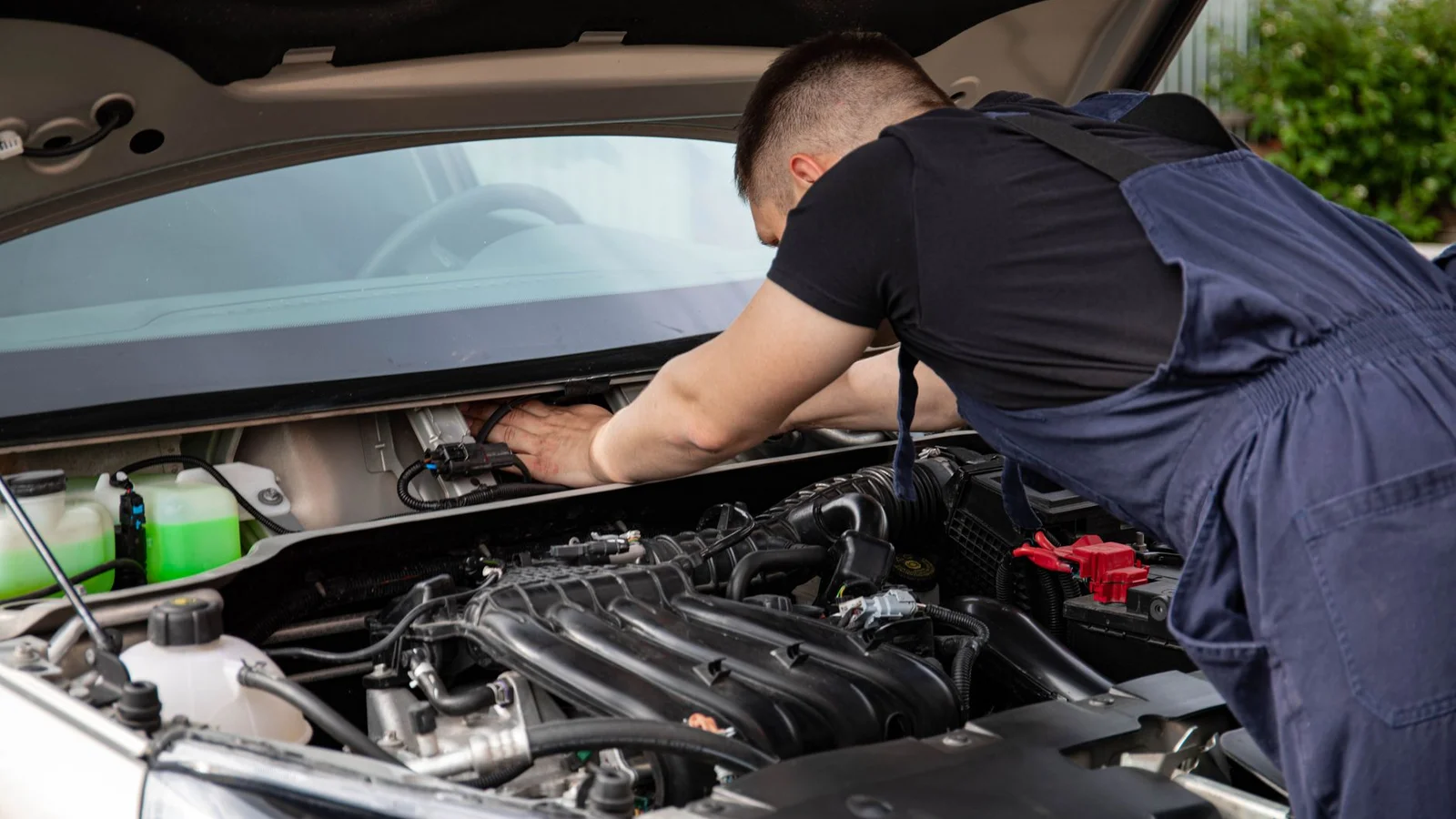
Full firewall access typically requires partial dashboard removal — this varies significantly by vehicle. At minimum, you can treat the firewall sections accessible from the engine bay side (with the hood open), the lower footwell area (with kick panels removed), and the transmission tunnel sides. Dashboard removal for full access is a significant job and only justified on full strip-down builds.
Heat Soak and the Firewall
The firewall is the wall between the engine bay and your feet, so it transmits heat as much as noise. A treatment that combines butyl mat with a thermal layer — a heat-reflective mat or a dedicated insulation product — cuts both the engine drone and the hot-engine-bay warmth that bakes the front footwells in summer traffic. In a hot climate, the heat reduction alone can justify the work.
When Firewall Treatment Isn’t Worth It
The firewall is the hardest area in the car to access. Doing it properly often means removing the dash, the HVAC box, the steering column, or the carpet and console — hours of teardown for a panel you can barely reach. On a quiet modern car with good factory firewall insulation, the payoff may not justify that effort.
It makes the most sense on older vehicles with thin or missing factory insulation, on diesels and other inherently loud engines, and when you already have the interior apart for a floor treatment. If you are not chasing engine noise specifically, your time is better spent on the doors and floor, where the same hours return a bigger drop in overall cabin noise.
Do the Easy Half First
You can capture much of the firewall benefit from the cabin side without a full dash teardown. Pulling the carpet and treating the lower firewall and the transmission tunnel — areas you can reach once the front carpet is back — addresses a large share of the engine and drivetrain noise for a fraction of the labor. Save the full behind-the-dash treatment for a car where noise is severe and you are already in deep.
Pairing this with a floor treatment is efficient, since the carpet is already out and the tunnel sits right between the two areas.
Liquid Deadeners for Tight Spots
The firewall is full of irregular shapes, brackets, and pass-throughs that flat mat cannot follow. A brush- or spray-applied liquid deadener gets into those contours and seals around grommets where a stiff sheet would leave gaps. Many thorough firewall jobs combine butyl mat on the flat sections with a liquid product in the corners and a thermal layer over the top for heat.
Bottom line: the firewall is worth treating when engine or exhaust noise is genuinely the problem and you can reach the panel without a full teardown, or when you already have the interior apart. Otherwise the same hours spent on doors and floor return more overall quiet, so prioritize accordingly and come back to the firewall only if engine noise still bothers you afterward.
Related: How to Sound Deaden a Car Floor
Related: Sound Deadening on a Budget
For firewall applications specifically: Dynamat Xtreme on Amazon — worth the premium here for adhesive durability.
For the firewall specifically: heat and adhesive quality matter most here, which is where Second Skin earns its keep. Damplifier Pro plus Spectrum or Mega Block handles it. Direct at secondskinaudio.com, 10 percent off with code FKNSNDIT10. See our Second Skin review.
Disclosure: affiliate links. We may earn a commission on Second Skin orders placed with code FKNSNDIT10, at no extra cost to you.
[faq]
Q: Is firewall treatment worth doing?
A: Yes for vehicles with noticeable engine noise or heat intrusion. It’s lower priority than doors and floor for most builds — do those first, then evaluate whether firewall treatment adds enough benefit.
Q: Can I treat the firewall from the engine bay side?
A: Yes — and it’s often easier than the cabin side. Clean the engine bay side of the firewall and apply mat to the accessible flat sections. This is the approach for builds that don’t involve dashboard removal.
Q: Should I use Dynamat or a budget mat on the firewall?
A: Dynamat or HushMat for the firewall specifically — the adhesive quality at high temperatures is worth the premium here. Save the budget mats for doors and trunk.
[/faq]
Planning the job? Use the coverage calculator and avoid these install mistakes that cause rattles.
Related reading
- Does Sound Deadening Reduce Road Noise? Realistic Expectations
- Does the Foam on Tri-Layer Sound Deadening Actually Do Anything?
- Sound Deadening for Subwoofers: What Actually Makes a Difference
- Sound Deadening for Cars: What It Is and Whether You Actually Need It
What You’ll Want on Hand
This site is an Amazon Associate and may earn a commission from qualifying purchases via these links.
- Browse butyl sound deadening mats on Amazon — The core first layer for any door, floor, or trunk deadening job
- See current closed-cell foam options — The decoupler layer between butyl and MLV or panels
- Shop sound deadening spray — Covers cavities and wheel wells that mats can’t reach