Noico vs Kilmat: Two Budget Deadeners Compared Head to Head
If you’ve done any research on budget sound deadening, you’ve landed on the same two names: Noico and Kilmat. They’re priced within a few cents per square foot of each other, use nearly identical butyl + foil construction, and are sold in the same quantity packs on Amazon. Choosing between them should be simple — and it mostly is.
Quick verdict: Buy Noico if you’re new to this and want a built-in installation guide. Buy Kilmat if price-per-square-foot is the deciding factor. Either one performs the same in a real car.

Construction: Basically Identical
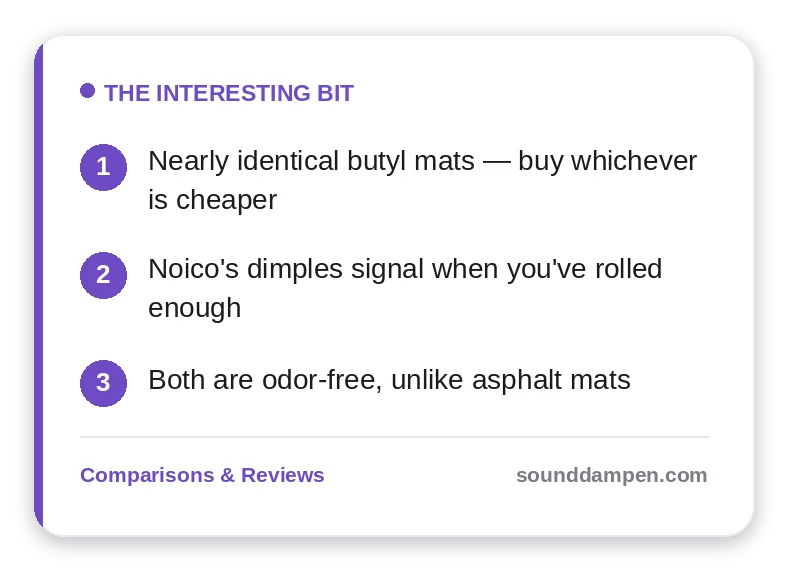
Both products are 80 mil thick butyl rubber mats with an aluminum foil top layer. Both use self-adhesive backing. Both are rated for automotive use across a wide temperature range. In lab testing and field use, they produce indistinguishable results on panel vibration reduction.
The One Real Difference: Installation Indicator
Noico’s foil has a checkered/embossed pattern that flattens out when the mat is fully pressed against the panel. This visual indicator tells you exactly where you’ve achieved full contact and where you still need to work with the roller. It’s a small design feature but genuinely useful for first-time installers who can’t feel the difference between full adhesion and partial contact.
Kilmat’s foil is embossed but doesn’t use the checkered pattern — you can’t visually confirm full adhesion the same way. Experienced installers don’t miss this feature, but it matters if it’s your first install.
Adhesive: Similar Performance, Minor Edge to Noico in Cold
Community reports suggest Noico’s adhesive performs slightly better in cold-weather installs (below 40°F). Both products benefit from warming the mat and panel surface before application in cold conditions — a heat gun is worth having either way.
Coverage and Value
At similar price points, compare pack sizes carefully. Kilmat packs are sometimes slightly larger for the same price, giving it a marginal per-square-foot advantage. Run the math on whatever’s in stock at the time — prices fluctuate and the difference is rarely significant.
Get Noico 80 mil: Noico on Amazon →
Get Kilmat 80 mil: Kilmat on Amazon →
Smell and Curing
Both Noico and Kilmat are butyl-based, so neither carries the lingering asphalt odor that plagues the cheapest no-name mats. You may notice a faint rubber smell for the first day or two after install, especially in a car that has been sitting in the sun, but it dissipates and does not return. If a mat stinks for weeks, it is not real butyl regardless of what the listing claims.
Coverage Math and Real Cost
Both brands sell in similar square-footage packs, and pricing tends to leapfrog depending on sales, so check the cost per square foot on the day you buy rather than assuming one is always cheaper. A typical pair of doors needs roughly 10 to 12 square feet; a full floor can run 35 to 50. Buy one size up from your estimate — running short mid-install and waiting on a second order is the most common regret.
Which One We’d Buy
They are close enough that price on the day should decide it. Noico’s indentation roller pattern gives beginners a built-in cue that they have pressed the foil down fully, which is a small but real advantage on your first job. Kilmat’s slightly smoother foil is marginally easier to wrap around hardware. Either one is a sound buy; neither is worth paying a premium over the other when they go on sale in rotation.
The Indentation Pattern Difference
Noico’s most-cited feature is the embossed dimple pattern stamped into its foil. As you roll the mat, the dimples flatten out, giving you a clear visual signal that you have applied enough pressure and fully bonded that section. For a first-timer who is unsure how hard to press, that feedback genuinely helps avoid the under-rolling that causes edges to lift later.
Kilmat’s foil is smoother, so you judge bond quality by feel and by the foil taking on the texture of the panel beneath. Experienced installers do not need the dimples; beginners often appreciate them.
Storage and Shelf Life
Both mats keep for years if stored flat and out of direct heat, so leftover material from one job is ready for the next. Keep it rolled loosely or laid flat rather than folded, since a hard crease in the foil can crack and create a weak spot. Stored sensibly, a spare pack is money in the bank for the next rattly panel you find.
So Which Should You Buy?
Treat them as interchangeable and let price and stock decide. If you are nervous about applying enough roller pressure, Noico’s dimpled foil gives you a built-in confidence check. If you want the slightly smoother foil for wrapping around door hardware, Kilmat edges it. Both are honest butyl mats that will outlast the car when installed properly.
What you should not do is agonize over the choice or pay a premium for one when the other is on sale. The money you might overspend chasing the marginally better budget mat is better put toward covering a second panel, which does far more for cabin quiet than the small difference between these two.
Related: Dynamat vs Kilmat
Related: Best Sound Deadening Mat for Cars
[faq]
Q: Is Noico or Kilmat better?
A: Performance is essentially equal. Noico’s installation indicator makes it more beginner-friendly; Kilmat sometimes has a slight price advantage. Either is a good choice.
Q: Does the checkered pattern on Noico actually help?
A: Yes — it’s a genuine practical advantage for first-time installers. The visual confirmation of full adhesion prevents the most common installation mistake (not pressing the mat fully).
Q: Can I mix Noico and Kilmat in the same vehicle?
A: Yes — they’re compatible materials. Many builders use whatever is better priced per square foot at the time of purchase and mix packs without issue.
[/faq]
Watching the budget? Here’s how to get the best results for under $100.
Related reading
- Does Cheap Sound Deadener Like Kilmat Actually Melt or Fail?
- Sound Deadening on a Budget: Best Results for Under $100
- Best Sound Deadening Mat for Cars: Top Picks Across Every Budget
- Dynamat vs Kilmat: Which Sound Deadener Is Worth the Price Difference
What You’ll Want on Hand
This site is an Amazon Associate and may earn a commission from qualifying purchases via these links.
- Shop butyl sound deadening mats — The core first layer for any door, floor, or trunk deadening job
- Compare deadener rollers on Amazon — Full adhesion needs rolling — hand pressure leaves air pockets